household · 7 min read
Should Toilet Paper Go Over or Under?
The 1891 patent drawing shows the roll hanging over, but cat owners and RV drivers have good reasons to flip it.
By WarmLark Editors · Updated October 2026
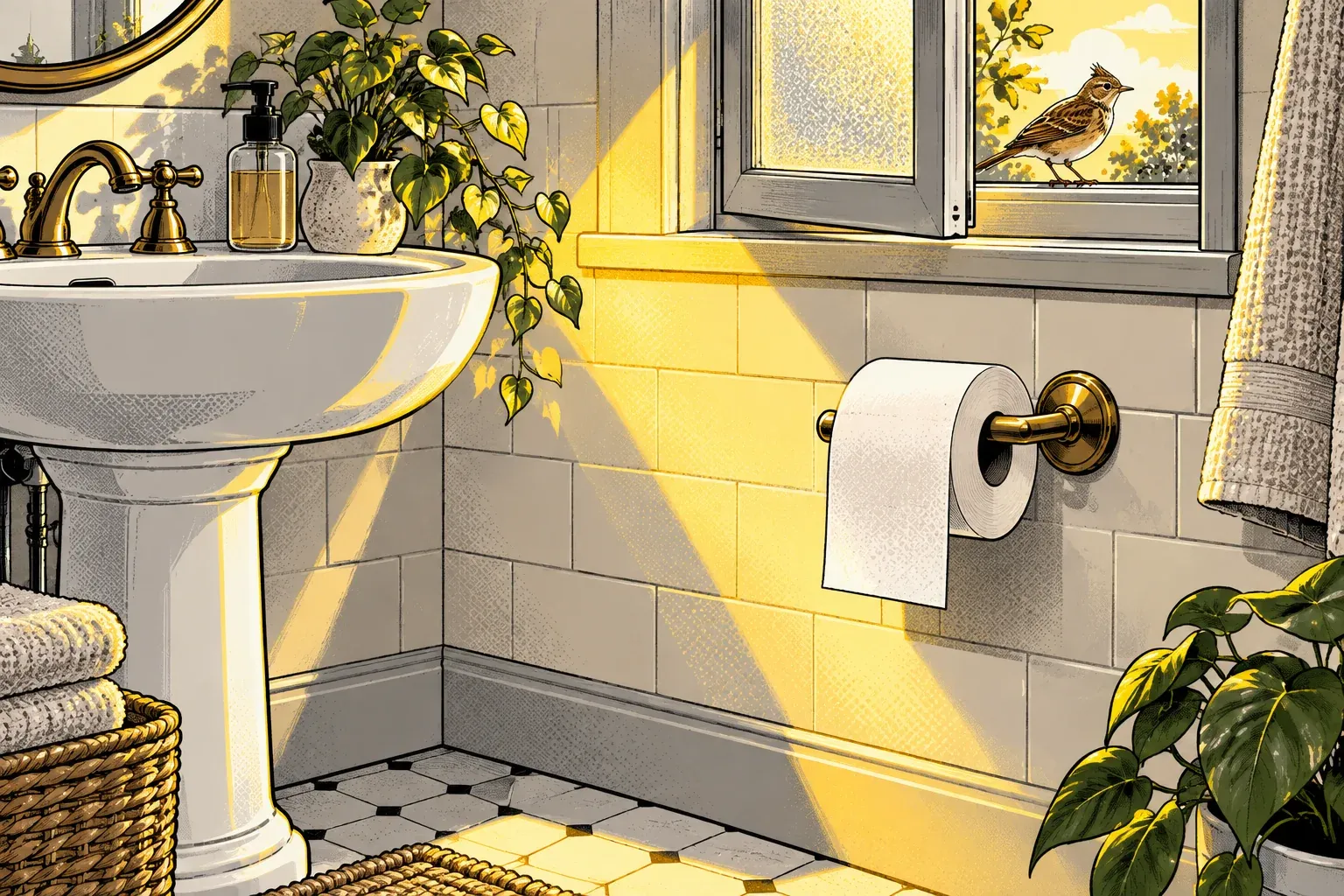
Hang it over, with the loose end falling down the front of the roll, unless something in your house keeps unrolling it. Over matches the drawing in the 1891 patent for perforated rolled paper, the sheet is easier to find and tear, and it’s what most Americans already do. Under is the better pick if you live with a cat or a toddler, if your holder leaves room behind the roll, or if you live in an RV.
Neither way is bad for you, and nobody is keeping score. The argument has still filled newspaper columns for almost 50 years.
Which side the sheet hangs on
On an over roll, the paper comes across the top and the loose sheet hangs down the front, on the side facing you. On an under roll, the paper comes off the bottom and the sheet hangs in the narrow space between the roll and your wall.
It’s the same roll on the same holder. To switch, you squeeze the spring rod, turn the roll around and snap it back in.
What changes is where your hand goes. Over puts the sheet in plain view, where you can grab it without looking, even with the light off. Under tucks it back toward the wall, where the roll looks neater from the doorway and you have to reach a little farther.
Flat sheets came first
For its first few decades, toilet paper you could buy in the US came as a stack of flat sheets with nothing to hang. Joseph Gayetty began selling packaged paper in New York in 1857 as “medicated paper for the water-closet,” with his name watermarked into each sheet. An 1858 advertisement in The New York Times priced it at 1,000 sheets for $1 from his shop at 41 Ann Street.
The roll came out of Albany. The Albany Institute of History and Art credits Seth Wheeler with an 1871 patent for wrapping paper perforated between sheets. His Albany Perforated Wrapping Paper Company, incorporated in 1877, came to make toilet paper its most important product. The Albany Institute’s online exhibit, New York’s Capital Region in 50 Objects, gives perforated toilet paper its own entry.
The roll in Wheeler’s 1891 patent
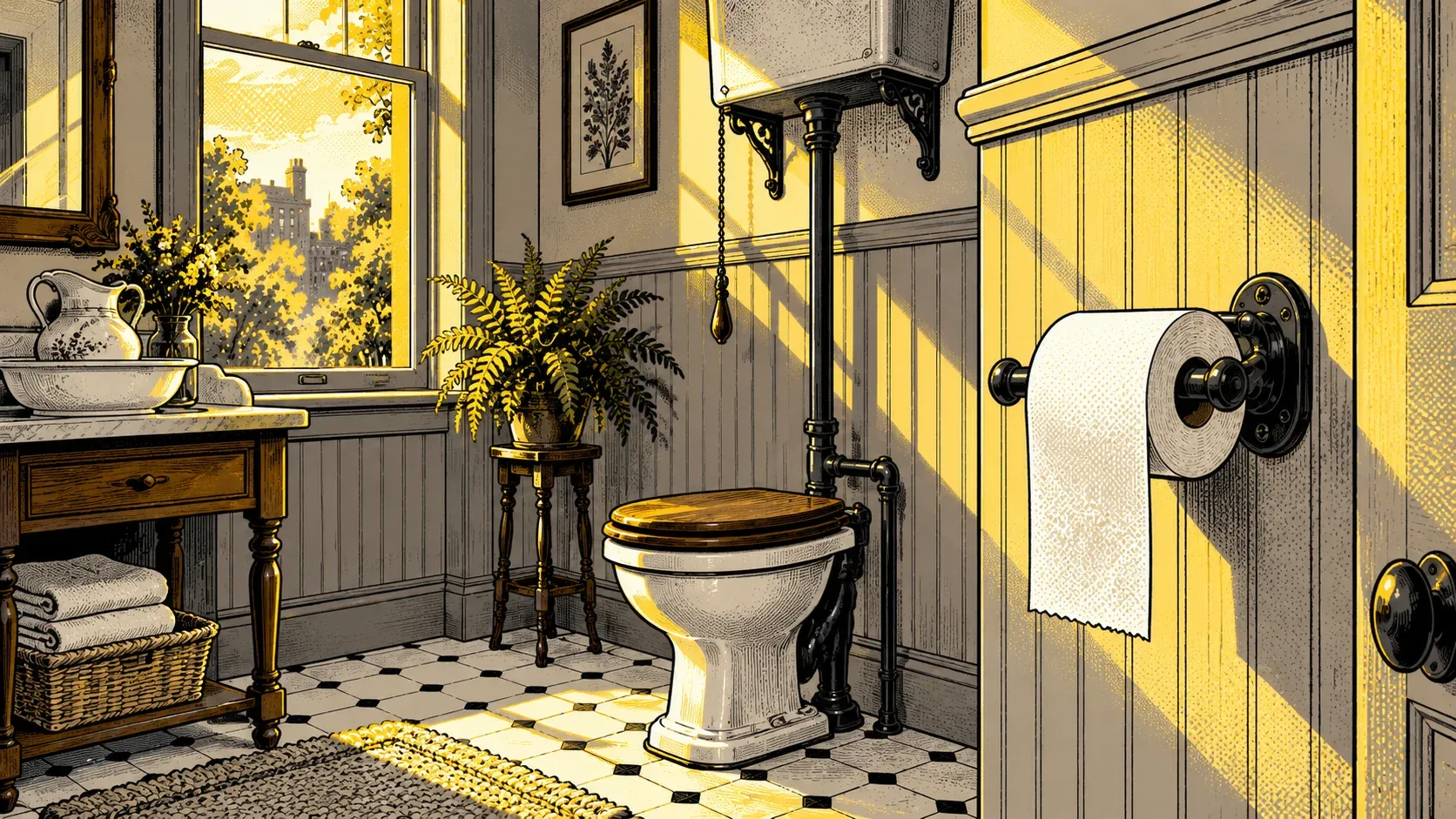
On September 15, 1891, Wheeler received US patent No. 459,516 for a “wrapping or toilet paper roll.” The patent covers the perforations. Wheeler staggered the small uncut points that hold one sheet to the next, so a pull puts sideways strain on the line and the sheet separates cleanly.
His Figure 1 shows the roll “suspended on the simplest form of fixture,” and the paper hangs over the front.
That drawing is the over side’s favorite piece of evidence, and it’s a fair one.
Wheeler claimed the perforations, though, and never said a word about which way the roll should face. If you hang yours under, you aren’t breaking any rule he wrote down.
Decades of letters, one big poll
Ann Landers first took up the question in her advice column in 1977, and her readers never dropped it. The question kept returning to her column for years after that, as readers wrote in to argue both sides. In a 1986 speech she said the topic had drawn 15,000 letters, more than anything else she’d written about.
The modern count is bigger. On February 22, 2022, the polling firm YouGov asked 27,810 US adults whether they prefer the next sheet to come from over or under the roll. Over got 59 percent and under got 14 percent, while 21 percent had no preference and 6 percent weren’t sure.
If you hang yours over, you’re with the clear majority. Among people who care, over wins by more than four to one, and more Americans shrugged at the question than picked under.
Over and under, row by row
Most of the practical differences come down to where the loose sheet ends up when you reach for it.
| Over | Under | |
|---|---|---|
| Tearing a sheet | Pull down and it snaps off with one hand | The sheet can cling to the roll and take a second try |
| Reaching the sheet | In front, in plain view | Behind the roll, close to the wall |
| Cats and kids | A swipe down the front spins off more paper | The same swipe winds the paper back on |
| Wall scuffs | Your hand stays off the wall | Knuckles brush the wall on a holder mounted tight |
| Matching the patent | Matches Wheeler’s 1891 drawing | Doesn’t match |
| A moving RV | Bumps can shake loose a few sheets | The roll tends to stay put |
Over takes four of the six rows.
Under wins the other two, cats and kids and the moving RV. Those are the rows that matter if your roll keeps ending up on the floor.
Homes where under wins
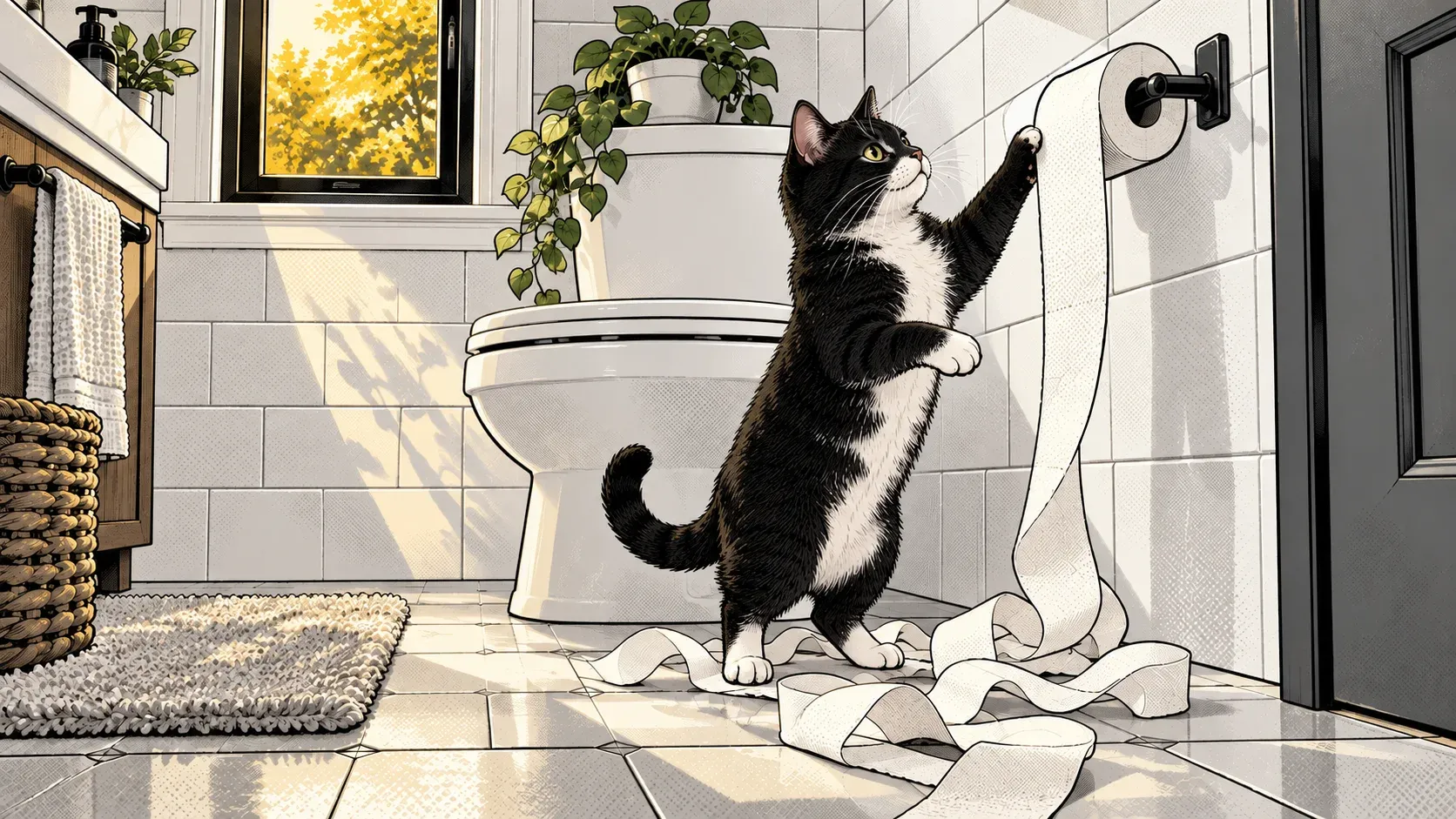
If you have a cat, that’s the strongest case. On an over roll, every downward bat at the front pulls a little more paper off, and a bored cat can leave a pile on the tile in a few minutes. On an under roll the same bat turns the roll the other way and winds the loose end back up.
Toddlers work the same way. A child who has just figured out that the roll spins gets a lot less paper for the effort when it’s hung under, and you spend less time rewinding it by hand.
If you travel in an RV or live on a boat, under matters more than in any house, because constant motion keeps nudging an over roll and the loose end creeps down mile after mile.
The last case is a holder that stands well off the wall. If your fingers fit easily behind the roll, under loses its one real drawback, and you get the tidier look with the loose end out of sight.
Settling it in a shared bathroom
If the people sharing a bathroom disagree, let whoever puts on the new roll decide. It’s simple, and the person doing the chore gets the say.
And if you’re the only one in the house who cares, you can probably flip it without a meeting. In the YouGov poll, 21 percent of adults said they had no preference at all.
If you want proof before you argue, try a quiet test. Hang the roll the other way for two weeks without saying anything. Then see whether anyone in the house flips it back.
Where over still makes sense
If none of those cases fits your house, over is the easier roll to live with. Your guests shouldn’t have to hunt for the end. A holder recessed into the wall leaves under’s sheet in a slot your fingers can barely reach. And if you like to fold the end into a point the way hotels do, that only works on the front of the roll.
A holder mounted low, or off to the side where you reach back at an angle, also favors over, since the sheet sits where your hand naturally lands.
Wheeler’s drawing is public, and you can look at it tonight. Search for patent 459,516 in the US Patent and Trademark Office’s free Patent Public Search, open the drawings, and Figure 1 shows his roll on a plain fixture with the paper hanging over the front.