household · 8 min read
Which Cleaning Products Should Never Be Mixed?
Bleach plus ammonia or vinegar gives off toxic gas. Learn the risky pairings, and what to do if you breathe the fumes, before you clean.
By WarmLark Editors · Updated October 2026
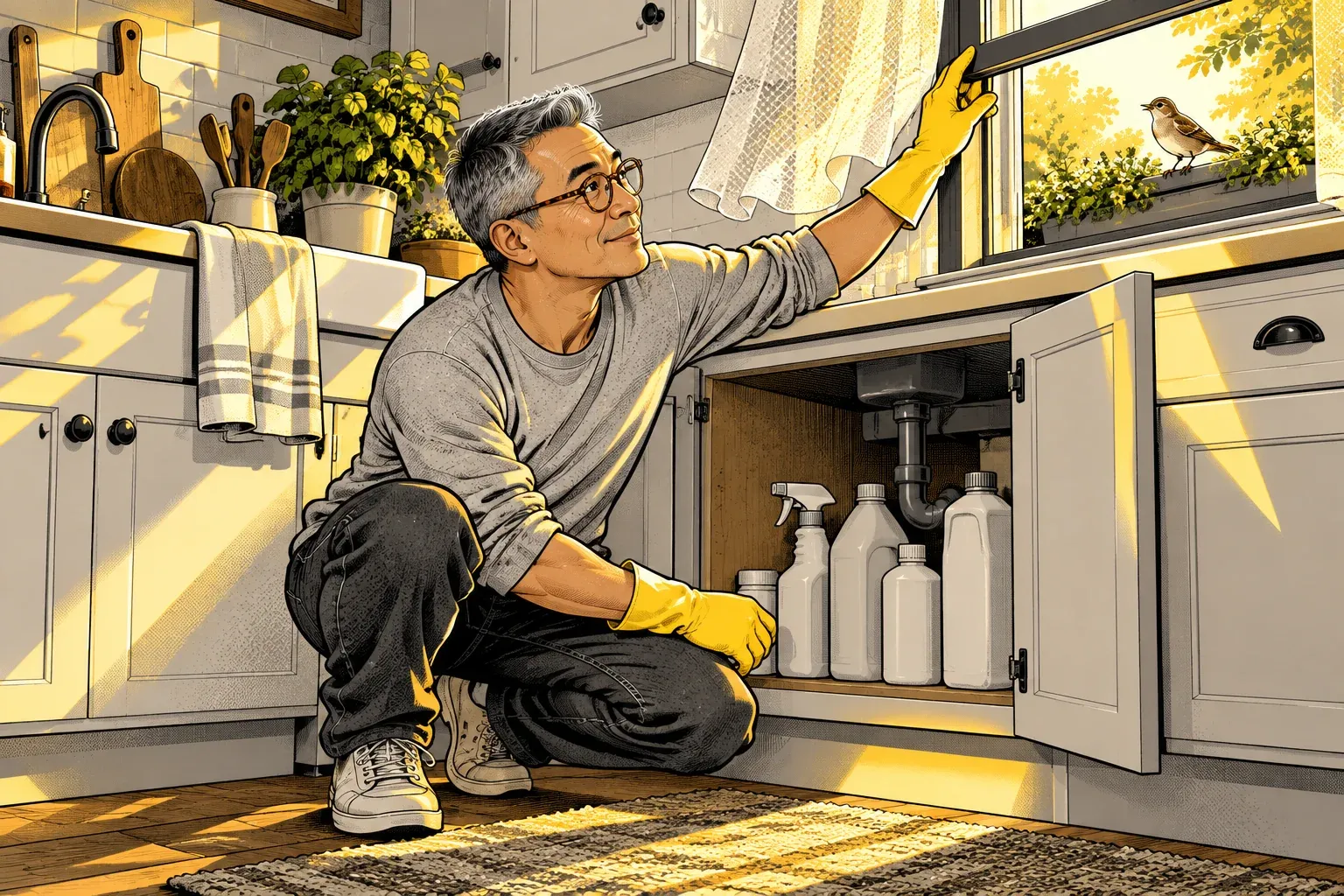
Bleach is in most of the dangerous pairs. Never mix it with ammonia, with an acid such as vinegar, or with rubbing alcohol, since each combination gives off a gas that burns your eyes, nose and lungs. Hydrogen peroxide and vinegar don’t belong in one bottle either. Neither do two different drain cleaners in one drain.
Bleach reacts with more of what’s under your sink than anything else you own, and the other half of the pair is often in a glass cleaner, a toilet bowl cleaner or a bottle of vinegar.
| Mixed together | What it gives off | Where the second ingredient hides |
|---|---|---|
| Bleach and ammonia | Chloramine gases | Some glass and multi-surface cleaners, urine |
| Bleach and an acid | Chlorine gas | Vinegar, some toilet bowl cleaners |
| Bleach and rubbing alcohol or acetone | Chloroform and other chlorinated compounds | Rubbing alcohol, nail polish remover |
| Hydrogen peroxide and vinegar | Peracetic acid | Two sprays poured into one bottle |
| Acid drain opener and lye drain opener | Violent heat and spatter | A second product poured on a clog the first one didn’t clear |
Bleach shows up in three of these five pairs, so it’s the bottle to store apart from the rest.
1. Bleach and ammonia
You’ve probably heard of this one, yet it still happens, usually by accident. Bleach reacts with ammonia to form chloramines, starting with monochloramine and moving on to dichloramine and nitrogen trichloride. All of them irritate the eyes and lungs, and a strong enough dose can injure the lungs.
Many household cleaners contain ammonia, according to the Agency for Toxic Substances and Disease Registry, and some glass cleaners are among them. Say you wipe the bathroom mirror with one, then reach for a bleach spray for the sink with the same damp cloth in your hand.
Urine reacts with bleach as well. If you pour straight bleach into an unflushed toilet, a diaper pail or a litter box, you can start the same reaction, even with no second bottle in sight.
2. Bleach and vinegar or other acids
Acid pulls chlorine gas out of bleach, and vinegar is the acid you most likely have in your kitchen.
Heavy-duty toilet bowl cleaners often contain hydrochloric acid, and if you pour one into a bowl that still holds bleach from an earlier scrub, the gas rises off the water right where your face is.
Use one toilet product per cleaning, and flush before you switch to another.
The CDC’s weekly report of April 24, 2020, written by Arthur Chang and colleagues at the agency, describes a woman who filled her sink with a 10 percent bleach solution, vinegar and hot water to soak her produce. She started coughing and wheezing and had trouble breathing. The emergency department gave her oxygen and bronchodilators, medicines that open the airways, then sent her home after a few hours of observation.
She had mixed the soak after news reports told people to clean the food they’d just bought.
3. Bleach and rubbing alcohol
Bleach reacts with rubbing alcohol, and with the acetone in many nail polish removers, to make chloroform and related chlorinated compounds. None of those are things you want to breathe in a closed bathroom while you wipe down the counters.
Both liquids get used to disinfect phones, counters and doorknobs, so it’s easy to see how they end up on the same rag. If you’re wiping down a whole room, pick one of the two for every surface. Switching halfway means rinsing with plain water and letting the surface dry before the second product touches it.
4. Hydrogen peroxide and vinegar
When you pour hydrogen peroxide into vinegar, the acetic acid in the vinegar combines with it to form peracetic acid. The Haz-Map occupational health database, as shown in the National Library of Medicine’s PubChem, lists peracetic acid as corrosive to the skin, eyes and respiratory tract, and as a strong oxidizer.
The two keep reacting after you mix them. Even the peracetic acid sold to industry comes as a settled blend of peracetic acid, hydrogen peroxide, acetic acid and water.
That means a premixed spray bottle keeps changing on the shelf, and you can’t tell how much of the irritant is inside when you pull the trigger next month. Keep the two in their own bottles, and never top up an old spray bottle of one with the other.
5. Two drain cleaners on one clog
The chemical drain openers you can buy come in two opposite kinds. Many use lye, also called sodium hydroxide, as dry crystals or a thick gel. Others use a strong acid instead.
Acid and lye release a burst of heat when they meet. In a pipe already full of standing water and the first product, the mix can boil and spit back out of the drain at you.
If one opener didn’t clear the clog, stop there. Call a plumber and tell them exactly what you already poured in.
6. Any mix meant to work harder
Plenty of mixing accidents start with a reason you’d recognize, such as a stain that won’t lift or a smell that won’t leave. Two cleaners poured together don’t make a stronger cleaner. A label’s warning against mixing covers every pairing, including ones that aren’t on this list.
When one product isn’t working, give it more time on the stain or more scrubbing. If you still want to try a second product, rinse the first one off completely before you start.
Poison center calls since 2020
Poison centers took 45,550 calls about cleaners and disinfectants from January to March 2020, according to the CDC report on the woman’s case. That was 20.4 percent more than the 37,822 calls in those months of 2019 and 16.4 percent more than the 39,122 in 2018. Bleach made up 62.1 percent of the rise in calls about cleaners, more than any other product type.
Calls about breathing in a cleaner rose from 4,713 to 6,379, the biggest jump of any route.
The problem didn’t go away with the pandemic. An abstract of the 2024 national poison data report from America’s Poison Centers ranks household cleaning substances second among all human exposures, at 6.94 percent, behind only pain relievers. For children 5 and younger, they ranked first.
Where the ingredients hide
Most accidents on this list happen because you can’t tell what’s in the second bottle from the front. The front names a job, like glass, toilet or mildew, and the chemistry sits in small print on the back.
On the label, look for sodium hypochlorite, ammonia or ammonium hydroxide, hydrochloric or sulfuric acid, sodium hydroxide, and isopropyl alcohol.
Then sort your cabinet into groups.
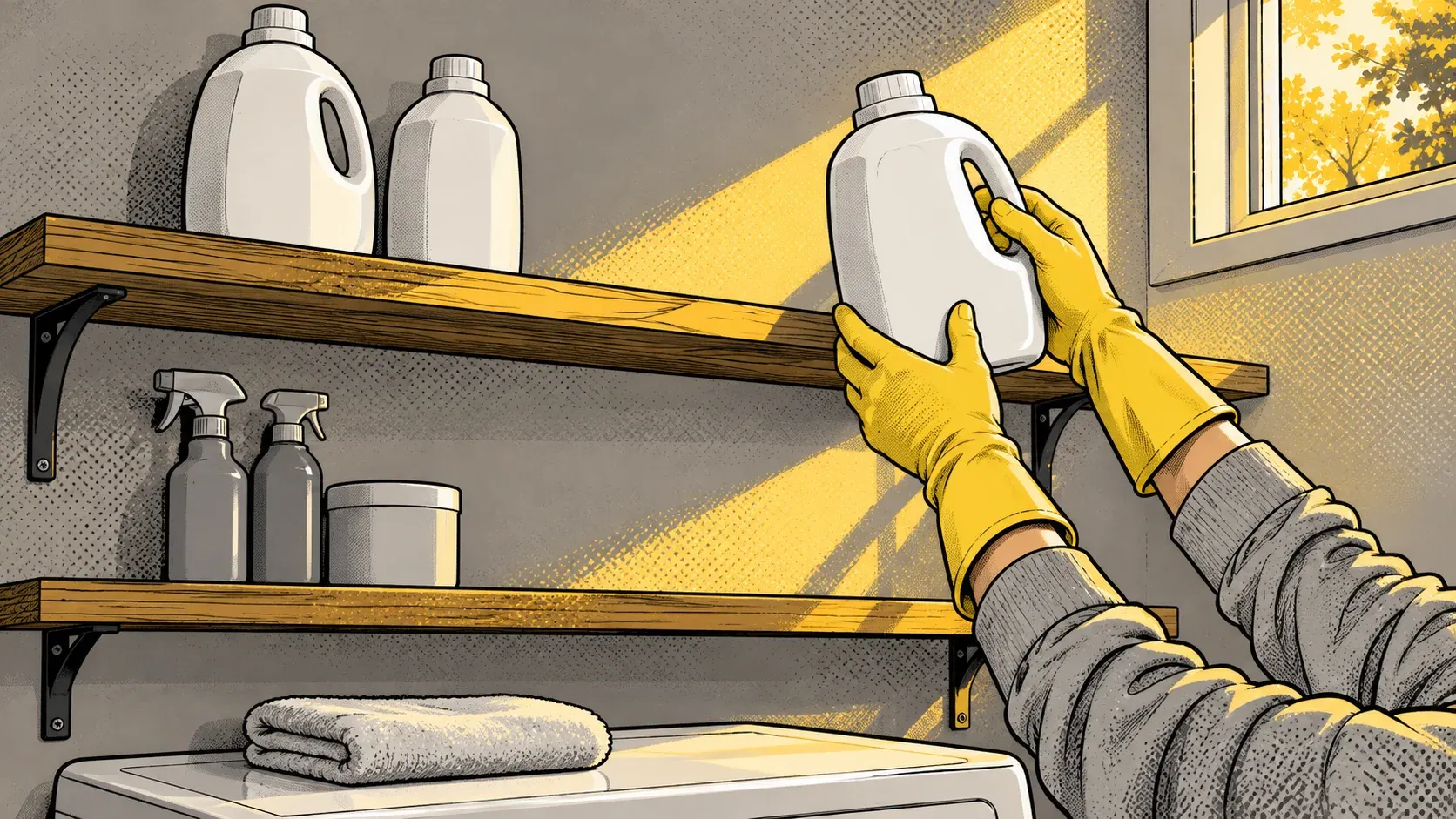
Keep bleach on a shelf of its own, away from acids and ammonia. Keep every cleaner in its original container too, since a product poured into a blank spray bottle loses its warnings along with its name.
If you breathed the fumes
Chlorine gas is heavier than air, the CDC notes, so it sinks and collects in low spots. That matters for small children and pets, and for you if you kneel down to keep scrubbing.
If your eyes sting or you start to cough while you clean, assume two products have met and follow the steps below.
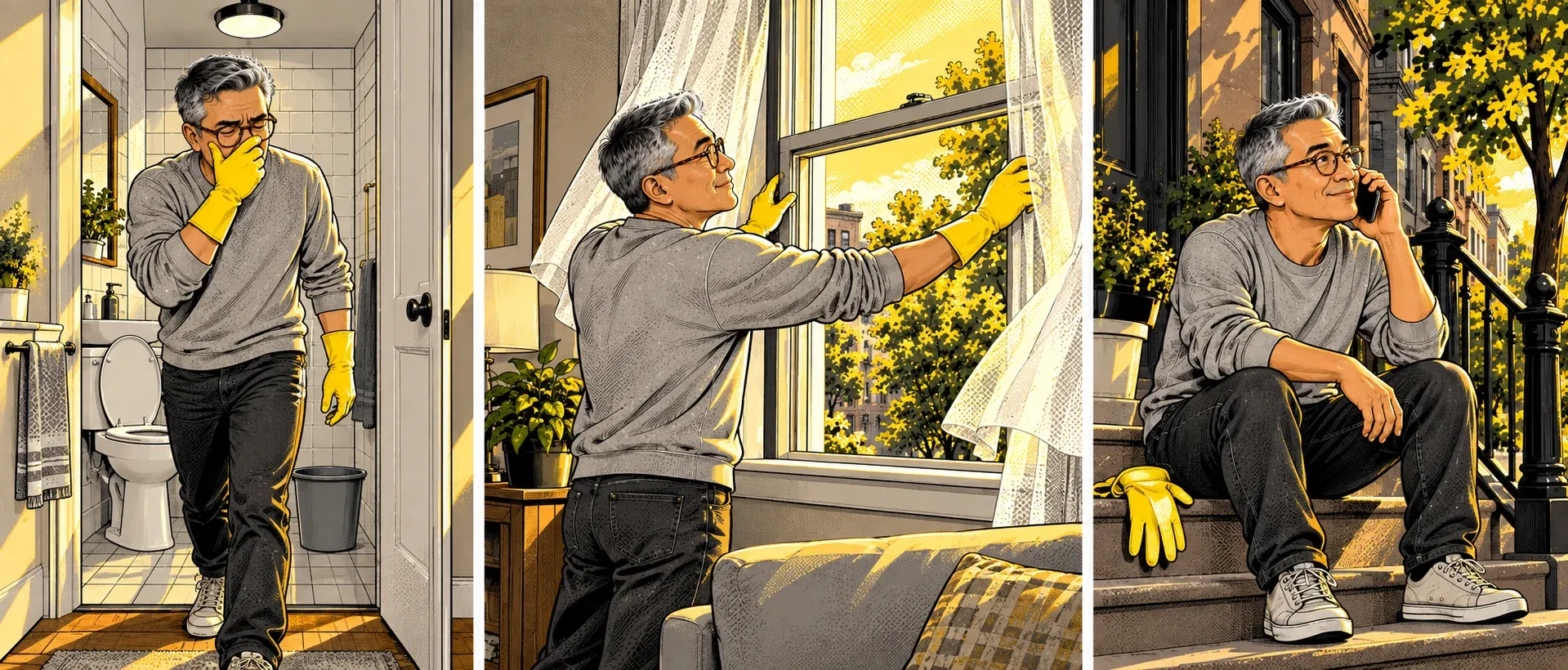
- Leave the room right away, and take children and pets with you.
- Open windows on your way out only if you can reach them without breathing more fumes. Don’t go back to clean up the mix.
- Call Poison Help at 1-800-222-1222. If the mixture splashed on you, take off those clothes and shower.
- Call 911 if anyone has trouble breathing or a tight chest, or faints.
When symptoms show up later
The CDC’s chlorine fact sheet lists burning in the nose, throat and eyes, along with tearing or blurred vision, as the signs of a high dose, and those come on right away. A smaller dose can bring symptoms that show up later, so if you start coughing or feel tight in the chest a few hours after you’ve finished cleaning, call Poison Help then too.
The abstract of a 1993 Southern Medical Journal review from the Pittsburgh Poison Center describes 216 people who breathed chlorine or chloramine gas from cleaning products mixed at home. Symptoms cleared within 6 hours for 200 of them.
The specialist who answers can tell you whether you’re fine to stay home or need to see a doctor.
Move the bleach to a shelf by itself, away from the toilet bowl cleaner and the glass spray. Then write 1-800-222-1222 in marker on a strip of tape and stick it across the bleach jug.